Una certa somiglianza
A Certain Resemblance
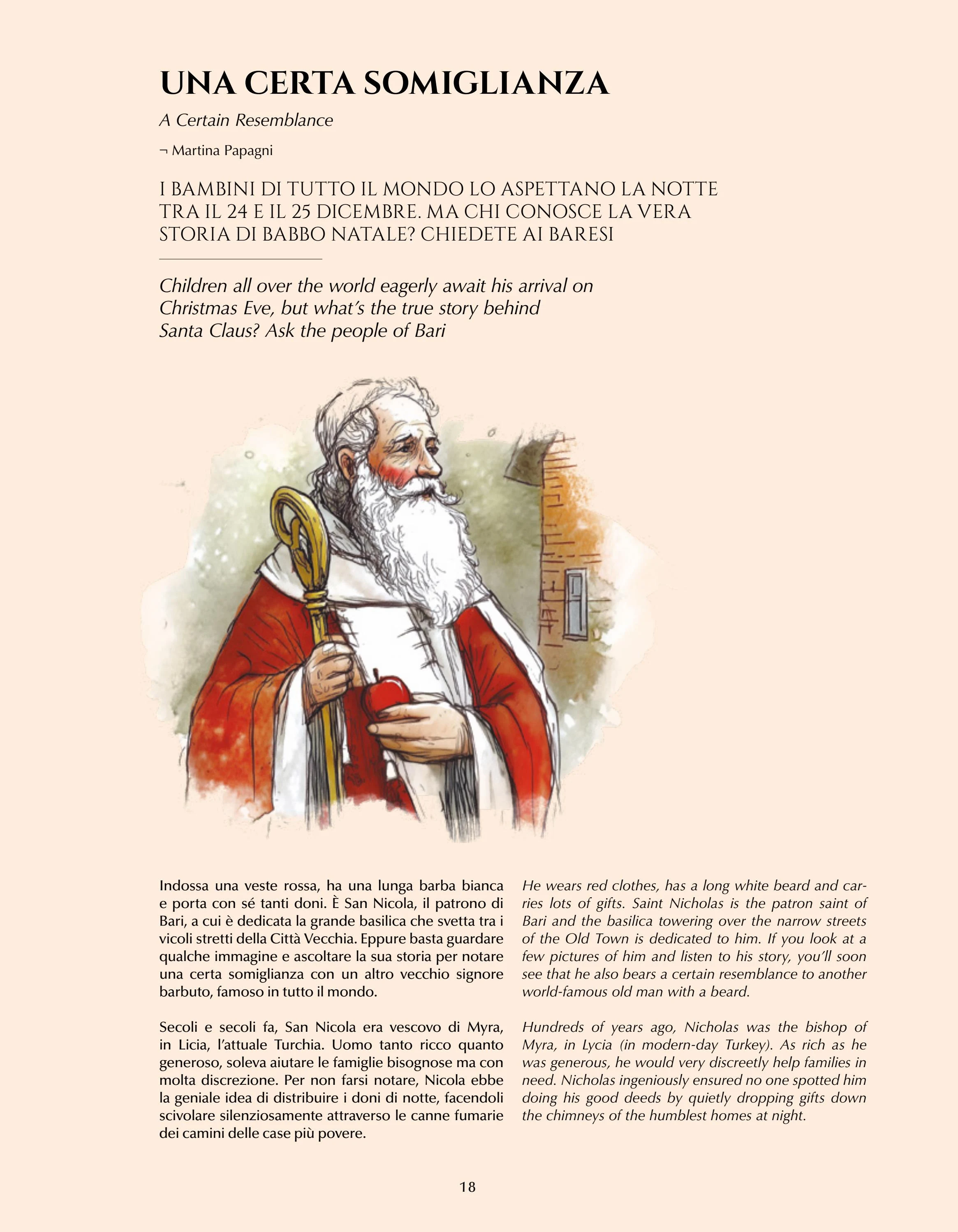
Indossa una veste rossa, ha una lunga barba bianca e porta con sé tanti doni. E San Nicola, il patrono di Bari, a cui è dedicata la grande basilica che svetta tra i vicoli stretti della Citta Vecchia. Eppure basta guardare qualche immagine e ascoltare la sua storia per notare una certa somiglianza con un altro vecchio signore barbuto, famoso in tutto il mondo.
Secoli e secoli fa, San Nicola era vescovo di Myra, in Licia, I'attuale Turchia. Uomo tanto ricco quanto generoso, soleva aiutare le famiglie bisognose ma con molta discrezione. Per non farsi notare, Nicola ebbe la geniale idea di distribuire i doni di notte, facendoli scivolare silenziosamente attraverso le canne fumarie dei camini delle case più povere.
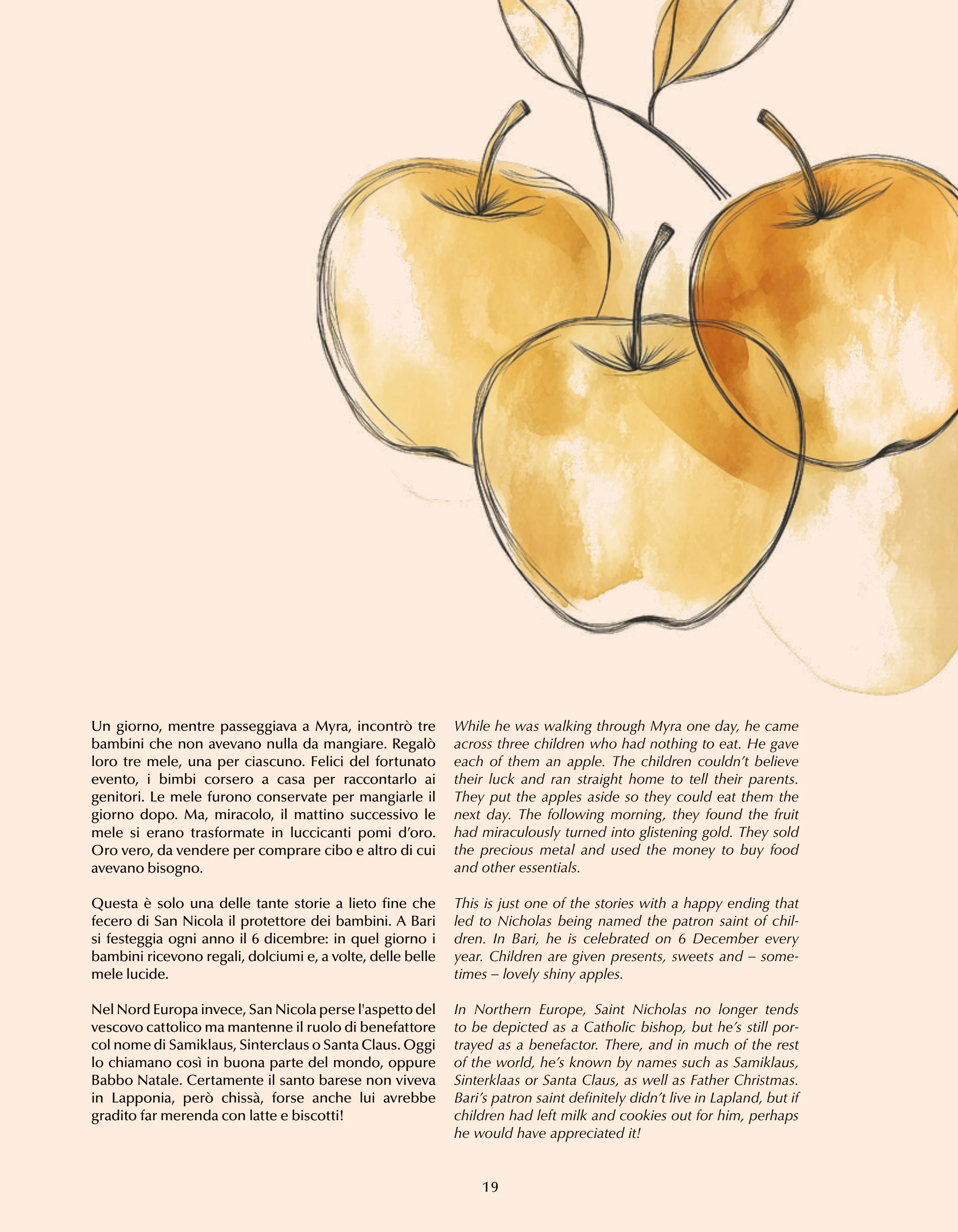
Un giorno, mentre passeggiava a Myra, incontrò tre bambini che non avevano nulla da mangiare. Regalò loro tre mele, una per ciascuno. Felici del fortunato evento, i bimbi corsero a casa per raccontarlo ai genitori. Le mele furono conservate per mangiarle il giorno dopo. Ma, miracolo, il mattino successivo le mele si erano trasformate in luccicanti pomi d’oro. Oro vero, da vendere per comprare cibo e altro di cui avevano bisogno.
Questa è solo una delle tante storie a lieto fine che fecero di San Nicola il protettore dei bambini. A Bari si festeggia ogni anno il 6 dicembre: in quel giorno i bambini ricevono regali, dolciumi e, a volte, delle belle mele lucide.
Nel Nord Europa invece, San Nicola perse l'aspetto del vescovo cattolico ma mantenne il ruolo di benefattore col nome di Samiklaus, Sinterclaus o Santa Claus. Oggi lo chiamano così in buona parte del mondo, oppure Babbo Natale. Certamente il santo barese non viveva in Lapponia, però chissà, forse anche lui avrebbe gradito far merenda con latte e biscotti!
He wears red clothes, has a long white beard and carries lots of gifts. Saint Nicholas is the patron saint of Bari and the basilica towering over the narrow streets of the Old Town is dedicated to him. If you look at a few pictures of him and listen to his story, you’ll soon see that he also bears a certain resemblance to another world-famous old man with a beard.
Hundreds of years ago, Nicholas was the bishop of Myra, in Lycia (in modern-day Turkey). As rich as he was generous, he would very discreetly help families in need. Nicholas ingeniously ensured no one spotted him doing his good deeds by quietly dropping gifts down the chimneys of the humblest homes at night.
While he was walking through Myra one day, he came across three children who had nothing to eat. He gave each of them an apple. The children couldn’t believe their luck and ran straight home to tell their parents. They put the apples aside so they could eat them the next day. The following morning, they found the fruit had miraculously turned into glistening gold. They sold the precious metal and used the money to buy food and other essentials.
This is just one of the stories with a happy ending that led to Nicholas being named the patron saint of children. In Bari, he is celebrated on 6 December every year. Children are given presents, sweets and — sometimes — lovely shiny apples.
In Northern Europe, Saint Nicholas no longer tends to be depicted as a Catholic bishop, but he’s still portrayed as a benefactor. There, and in much of the rest of the world, he’s known by names such as Samiklaus, Sinterklaas or Santa Claus, as well as Father Christmas. Bari’s patron saint definitely didn’t live in Lapland, but if children had left milk and cookies out for him, perhaps he would have appreciated it!