Ritorno a casa
Coming Back Home
Erano passati alcuni minuti da quando, assorto nei suoi pensieri, aveva iniziato a far roteare tra le mani il cartoncino rosso vermiglio, estratto con malcelata impazienza da una busta dello stesso colore. Per la prima volta era stata recapitata della posta indirizzata a lui in quella casa di Stoccolma, dove viveva con sua moglie e sua figlia. Fu strano abbandonarsi al piacere dell’invito che aveva appena ricevuto, scritto a mano su carta robusta ed elegante.
Voleva andarci al matrimonio di Vincenzo, il compagno di banco del liceo, il confidente della sua adolescenza, I'amico con cui aveva trascorso indimenticabili pomeriggi per le strade della Valle d’Itria, quella terra di confine incastonata tra le province di Bari, Brindisi e Taranto.
Non si sentivano più spesso come quindici anni prima, quando si era trasferito per lavoro in Svezia. Qui aveva conosciuto Astrid e insieme erano diventati una famiglia, destinata ad allargarsi con un secondo bambino in arrivo. Per questo motivo aveva preso da solo un volo per Brindisi a dicembre, non immaginando le emozioni che avrebbe riscoperto da lì a poco.
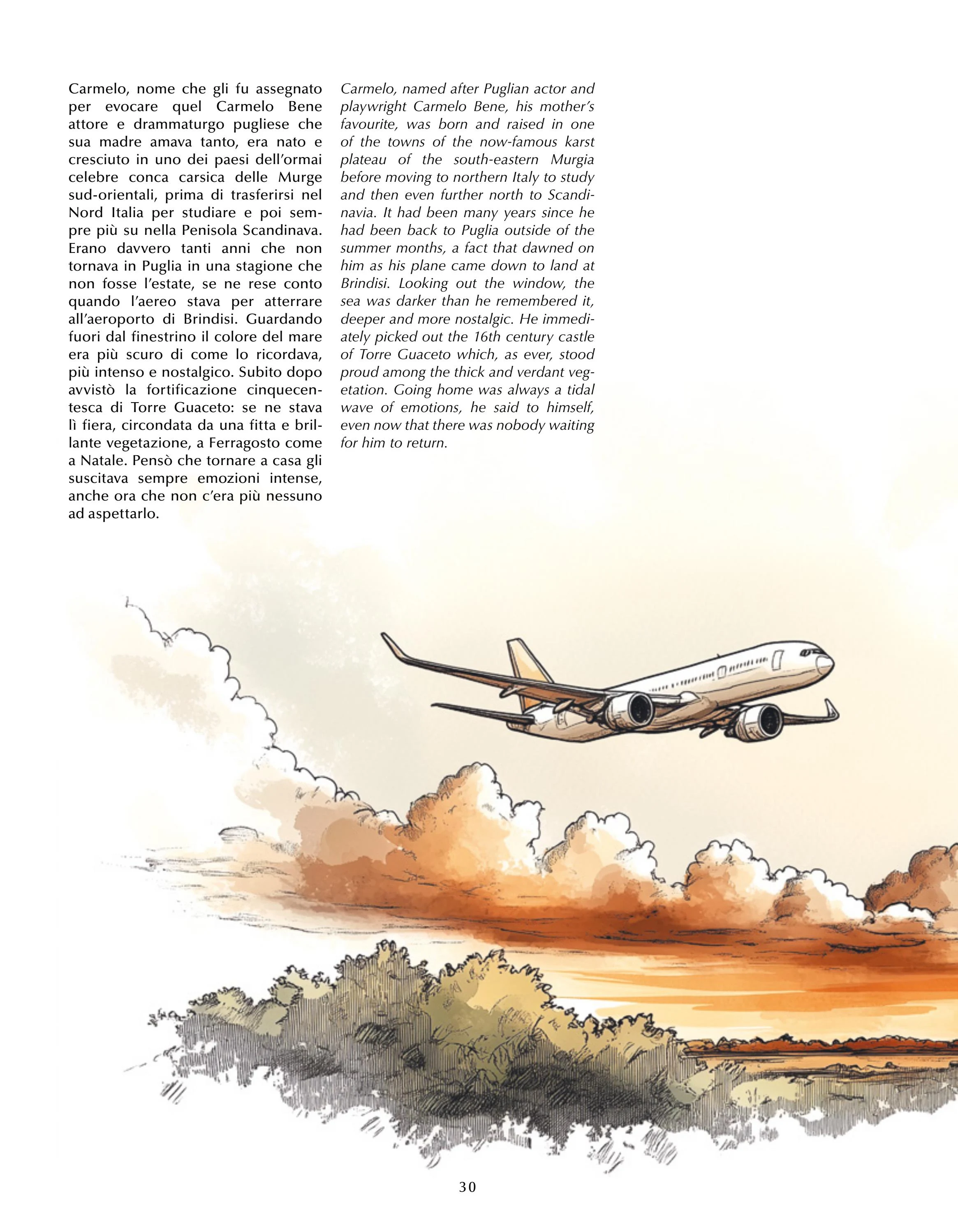
Carmelo, nome che gli fu assegnato per evocare quel Carmelo Bene attore e drammaturgo pugliese che sua madre amava tanto, era nato e cresciuto in uno dei paesi dell’ormai celebre conca carsica delle Murge sud-orientali, prima di trasferirsi nel Nord Italia per studiare e poi sempre più su nella Penisola Scandinava. Erano davvero tanti anni che non tornava in Puglia in una stagione che non fosse l'estate, se ne rese conto quando l'aereo stava per atterrare all'aeroporto di Brindisi. Guardando fuori dal finestrino il colore del mare era piu scuro di come lo ricordava, più intenso e nostalgico. Subito dopo avvisto la fortificazione cinquecentesca di Torre Guaceto: se ne stava lì fiera, circondata da una fitta e brillante vegetazione, a Ferragosto come a Natale. Penso che tornare a casa gli suscitava sempre emozioni intense, anche ora che non c’era più nessuno ad aspettarlo.
Guardando fuori dal finestrino dell'aereo, il colore del mare era più scuro di come lo ricordava, più intenso e nostalgico Si sbagliava: c’erano i suoi amici del liceo, qualcuno non era mai andato via, qualcun altro era tornato, per partecipare come lui al matrimonio. Gli raccontarono delle loro vite e lo aggiornarono su quali fossero gli eventi e gli appuntamenti imperdibili del Natale in Valle d’Itria. Fu rassicurante scoprire che tante cose erano rimaste le stesse. A volte la felicita passa proprio dalla voglia di ritrovarsi nei luoghi dell’infanzia.
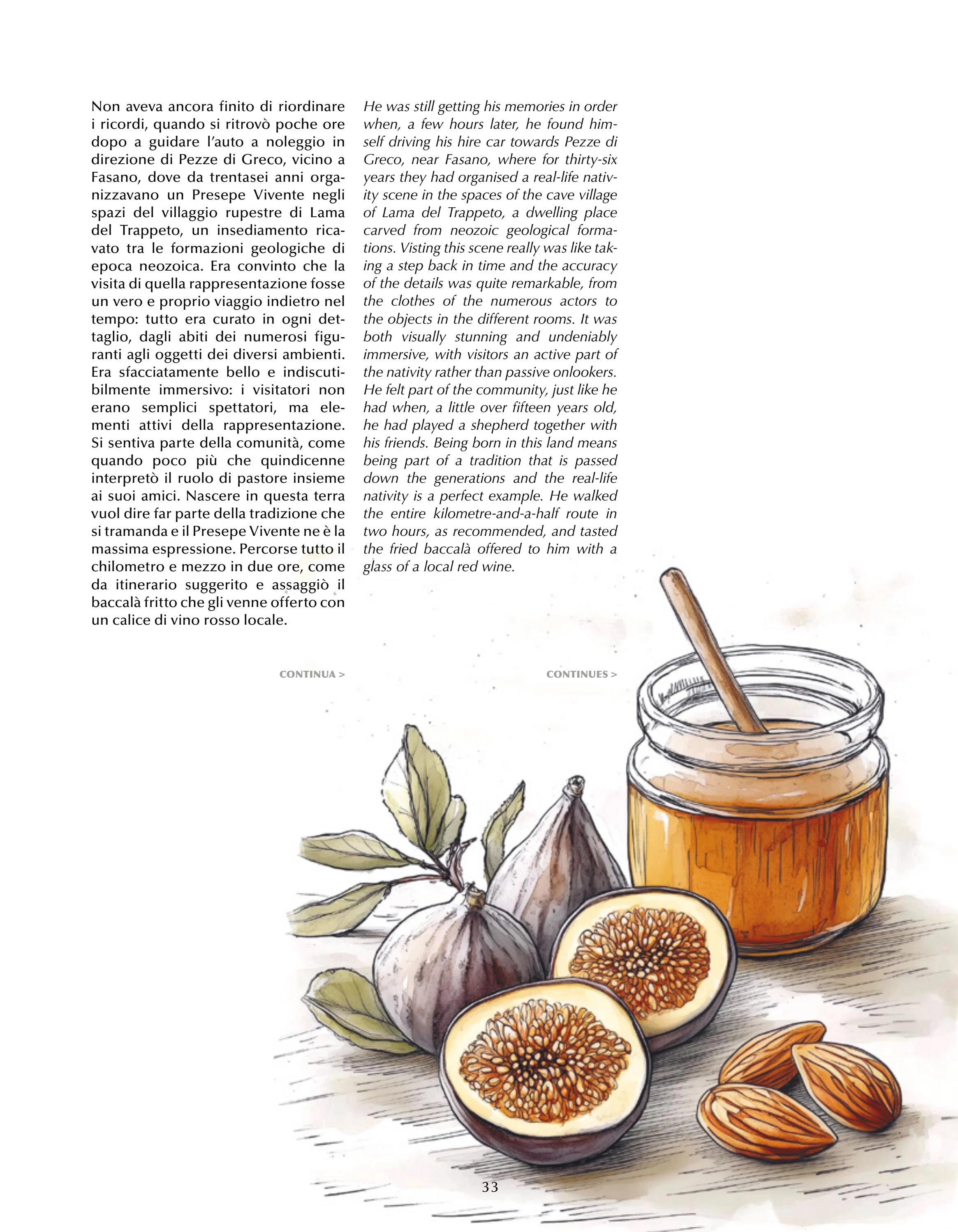
Seguirono giorni pieni di incontri, di profumi, di immagini e sapori; giorni che lo riportarono indietro nel tempo, a quando si capiva che era Natale dal profumo di vincotto per le strade. Pensava spesso al sorriso di sua nonna Anna, che ogni anno a meta settembre raccoglieva tantissimi fichi per fare il vincotto, sostenendo che il giorno di Natale sarebbe arrivato presto e non poteva farsi sorprendere impreparata: le cartellate dovevano essere immerse, servite e mangiate nel profumatissimo “cotto”.
Ogni piatto era legato a un ricordo e ogni ricordo a un anno felice della sua vita Aveva viaggiato tanto, e durante alcune vacanze di Natale, gli era capitato di ritrovarsi in luoghi bellissimi in giro per il mondo, masi sentiva a casa solo quando era avvolto in quel profumo e dai sapori che non aveva mai dimenticato.
Ogni piatto della tradizione preparato a dicembre era legato a un ricordo e ogni ricordo a un anno felice della sua vita: il torrone fatto in casa con le mandorle tostate, che da bambino rubava furtivamente sotto lo sguardo distratto di sua nonna; i panzerotti dolci fritti, ripieni di pasta reale e immersi nel miele, che sua mamma conservava in dispensa nelle capasedde di ceramica, aggiungendo qualche stecca di cannella come si faceva a Putignano. E c'erano le pettole, frittelle da mangiare ancora bollenti nelle vie di Alberobello, con i tetti festosi coperti dalle installazioni luminose e le strade riscaldate dal calore dei mercatini.
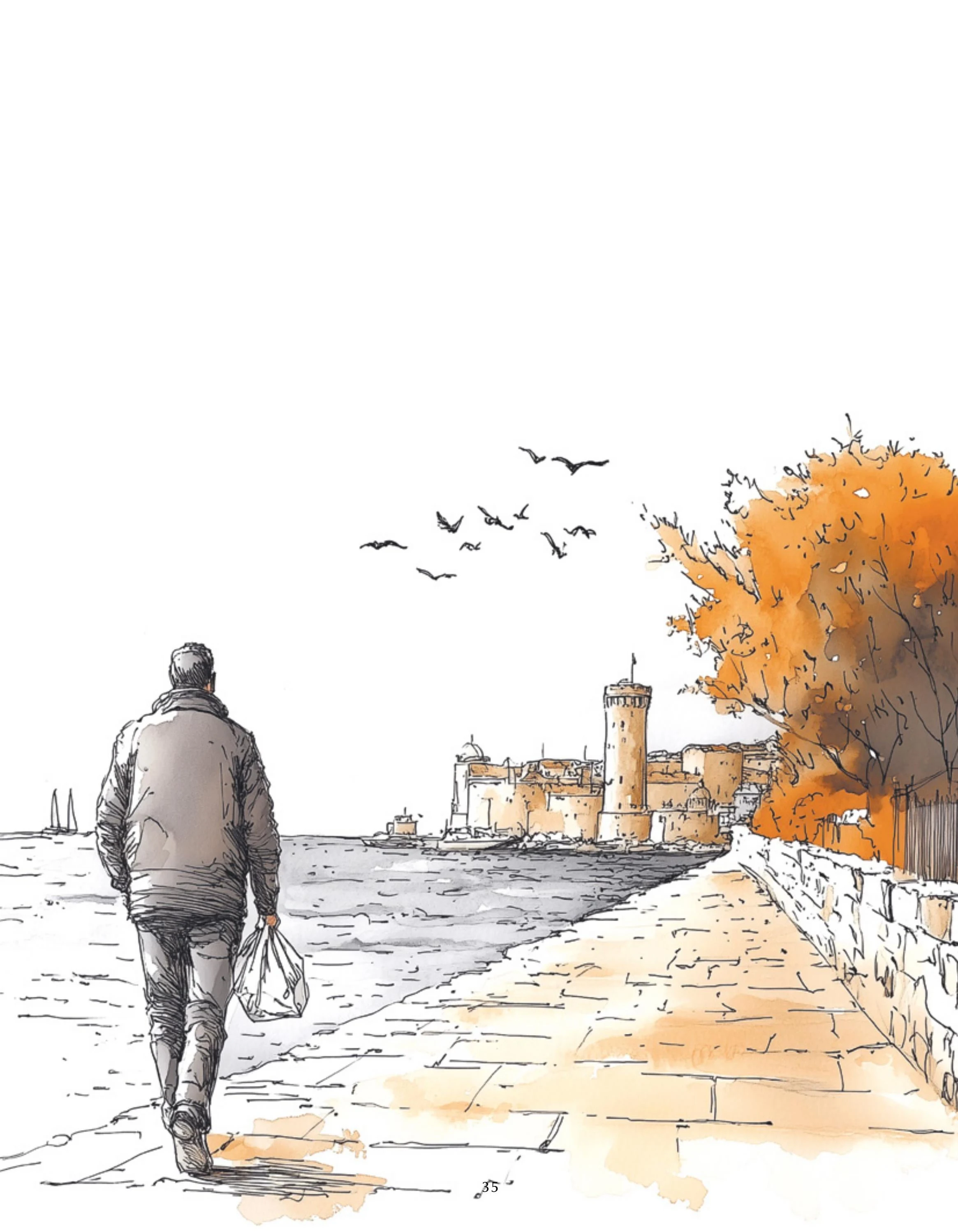
Carmelo trascorse i giorni prima del matrimonio del suo amico alla ricerca dei luoghi del suo passato. Passeggiò da solo lungo la costa di Capitolo, frazione di Monopoli: ci andava con suo padre a comprare il crudo di mare per la cena della Vigilia e il capitone da cuocere al forno, con tantissimo alloro, come si raccomandava suo nonno.
Non aveva ancora finito di riordinare i ricordi, quando si ritrovò poche ore dopo a guidare l'auto a noleggio in direzione di Pezze di Greco, vicino a Fasano, dove da trentasei anni organizzavano un Presepe Vivente negli spazi del villaggio rupestre di Lama del Trappeto, un insediamento ricavato tra le formazioni geologiche di epoca neozoica. Era convinto che la visita di quella rappresentazione fosse un vero e proprio viaggio indietro nel tempo: tutto era curato in ogni dettaglio, dagli abiti dei numerosi figuranti agli oggetti dei diversi ambienti. Era sfacciatamente bello e indiscutibilmente immersivo: i visitatori non erano semplici spettatori, ma elementi attivi della rappresentazione. Si sentiva parte della comunita, come quando poco più che quindicenne interpreto il ruolo di pastore insieme ai suoi amici. Nascere in questa terra vuol dire far parte della tradizione che sitramanda e il Presepe Vivente ne è la massima espressione. Percorse tutto il chilometro e mezzo in due ore, come da itinerario suggerito e assaggio il baccala fritto che gli venne offerto con un calice di vino rosso locale.
Un antidoto contro la nostalgia: passeggiare sulla costa di Capitolo, vicino a Monopoli, come faceva da bambino con suo padre Aveva ancora pochi giorni da trascorrere in Valle d’Itria, presto sarebbe tornato a Stoccolma dalla sua famiglia, portando con sé la voglia di raccontare loro il Natale della sua infanzia. Ma ora non voleva lasciarsi travolgere dalla tristezza e trovo uno stratagemma per scacciarla via: lontano da lì, sopraggiunto il bisogno di risentirsi a casa, avrebbe chiuso gli occhi e respirato profondamente, immaginando il profumo del vincotto per le vie del suo paese illuminate nei giorni di festa. Avrebbe riposto in valigia fichi secchi, paste di mandorle e torrone. Avrebbe promesso a se stesso di tornare presto, per ritrovare i ricordi, per ritrovarsi.
Having pulled it out impatiently from a matching envelope, he had now been turning the vermillion coloured card in his hands for several minutes, lost in thought. It was the first time he had received post at the house in Stockholm he shared with his wife and daughter. The invitation contained in the envelope, handwritten on rigid, elegant card, was a pleasant surprise.
He was excited at the idea of going to the wedding of his old friend Vincenzo, his classmate at high school, his confidant during adolescence, someone he had spent many unforgettable afternoons with on the streets of Valle d’Itria, a borderland that separates the provinces of Bari, Brindisi and Taranto.
They didn’t hear from each other as often as they did fifteen years ago when he first moved to Sweden for work. Here he had met Astrid and they had become a family with a second child now on the way.
That was why he had flown to Brindisi alone in December, blissfully unaware of the emotions that would be rekindled in him when he got there.
Carmelo, named after Puglian actor and playwright Carmelo Bene, his mother’s favourite, was born and raised in one of the towns of the now-famous karst plateau of the south-eastern Murgia before moving to northern Italy to study and then even further north to Scandinavia. It had been many years since he had been back to Puglia outside of the summer months, a fact that dawned on him as his plane came down to land at Brindisi. Looking out the window, the sea was darker than he remembered it, deeper and more nostalgic. He immediately picked out the 16th century castle of Torre Guaceto which, as ever, stood proud among the thick and verdant vegetation. Going home was always a tidal wave of emotions, he said to himself, even now that there was nobody waiting for him to return.
Looking out the window, the sea was darker than he remembered it, deeper and more nostalgic But he was wrong: his school friends were there; some had never left, others had come back to attend the wedding, just like him. They told him about their lives and filled him in on the key Christmas happenings in Valle d’ltria. It was reassuring to find out how little things had changed. Sometimes happiness is as simple as going back to the places you grew up in.
The next few days were a blur of social events, smells, images and flavours; days that transported him back to a time when you knew it was Christmas because of the scent of vincotto in the streets.
He often thought of the kindly smile of his grandma Anna, who in mid-September every year would pick lots of figs and start getting them ready, explaining how Christmas was just round the corner and she didn’t want to leave everything till the last minute: the cartellate had to be soaked, served and eaten in fragrant “cotto”, or grape must.
Every dish stirred up memories and every memory took him back to a happy place He had travelled a lot and had spent Christmas in some wonderful places around the world but he only really felt at home when he was surrounded by those heady fragrances and flavours that he had never forgotten.
Every traditional dish prepared in December stirred up memories and every memory took him back to a happy place: homemade torrone with toasted almonds, which as a child he would furtively steal from under the nose of his grandma; sweet fried panzerotti filled with pasta reale - almond paste - and dipped in honey, which his mum kept in typical ceramic capasedde vases in the pantry, adding a few sticks of cinnamon as was the practice in Putignano. Not forgetting the pettole, fritters to be eaten piping hot in the streets of Alberobello against the backdrop of the brightly-lit festive roofs and the vibrant, atmospheric Christmas markets.
Carmelo spent the days before his friend’s wedding seeking out the places of his past. He walked alone along the seafront of Capitolo, a resort in Monopoli: he used to go there with his Dad to buy the raw fish they would eat on Christmas Eve and the capitone - eel - to bake in the oven with lots of bay leaves, as his granddad insisted.
He was still getting his memories in order when, a few hours later, he found himself driving his hire car towards Pezze di Creco, near Fasano, where for thirty-six years they had organised a real-life nativity scene in the spaces of the cave village of Lama del Trappeto, a dwelling place carved from neozoic geological formations. Visting this scene really was like taking a step back in time and the accuracy of the details was quite remarkable, from the clothes of the numerous actors to the objects in the different rooms. It was both visually stunning and undeniably immersive, with visitors an active part of the nativity rather than passive onlookers. He felt part of the community, just like he had when, a little over fifteen years old, he had played a shepherd together with his friends. Being born in this land means being part of a tradition that is passed down the generations and the real-life nativity is a perfect example. He walked the entire kilometre-and-a-half route in two hours, as recommended, and tasted the fried baccala offered to him with a glass of a local red wine.
Basking in the memories: he walked along the coast in Capitolo, near Monopoli, as he did as a child with his father He still had a few days left in Valle d’Itria but soon he would be heading back to Stockholm and his family, where he would tell them all about the Christmases of his childhood. Worried that his nostalgia would get the better of him, he came up with a strategy for keeping it at bay: when he found himself assailed by that desire to return home, he would close his eyes, take a deep breath and recall the fragrance of vincotto on the streets of his town at Christmas time. He would take dried figs, almond paste and torrone home with him. He would promise himself that he would come back soon, to rediscover his past, to rediscover himself.