Il tesoro in fondo al mare
Treasure at the Bottom of the Sea
Mimmo ti accoglie fuori dalle mura della sua casa, che a sua volta è fuori dalle mura di Grottaglie e nel quartiere dei ceramisti, che a sua volta sembra fuori dal mondo, lì col mare di Taranto all’'orizzonte. Con timidezza teatrale prende la parola davanti al grande portone, un gesto che compie verso tutti coloro che vogliono visitare Casa Vestita, la sua dimora-museo. E inizia a dire: «Questo posto I'ho sognato sin da bambino». E doveva destare sospetto quella camicia bianca e il cappello panama portato con disinvoltura, come un Garcia Marquez che traduce il realismo magico in pugliese. Perché ciò che intende è letterale: «Sognavo i numeri. E poi sognavo il cortile di una grande casa, dove correvo e giocavo. Un giorno di vent’anni fa mi ci hanno portato e ho riconosciuto il luogo. E mi son detto: questa deve diventare casa mia». Non solo una dimora signorile: ma anche un “giardino segreto”. Come a Grottaglie ce ne sono qua e la: «A fine Ottocento i ceramisti diventarono ricchi e cominciarono a costruire giardini murati per far prendere il fresco alle loro signore, nella totale discrezione. Questo è uno dei più belli».
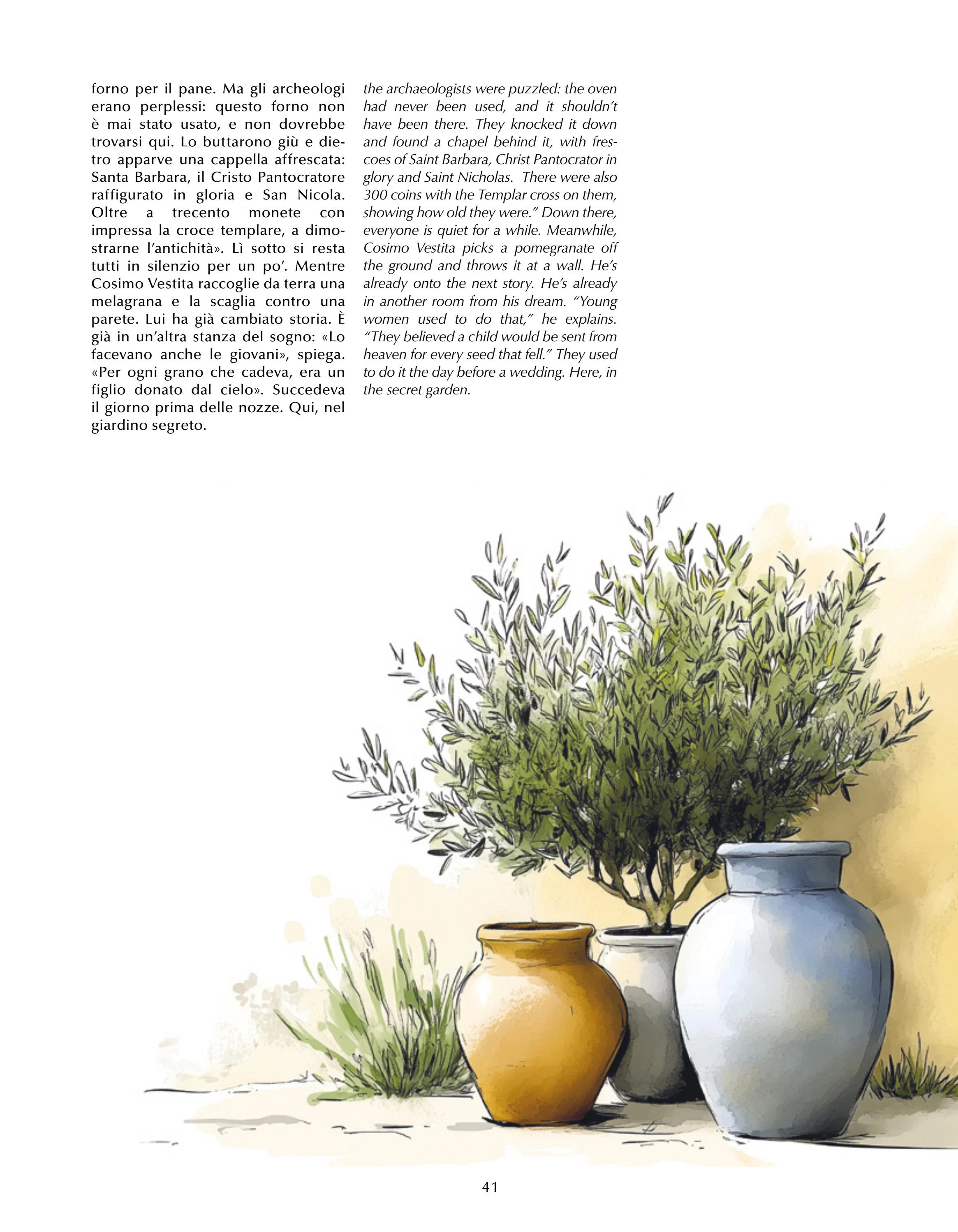
Ogni passo è un nuovo racconto: in giardino troneggiano le giare di terracotta alte come un uomo e disposte a falange come fossero guerrieri I soldi per comprare pero non li aveva: possedeva le sue mani, la bottega di mastro ceramista con l'insegna Cosimo Vestita e qualche cambiale da firmare. Ma senza pensarci piu di tanto, forse anch’ella proiettata nell'incantesimo, la signora ultranovantenne che da ragazza passeggiava nel giardino decise di venderla a lui. A un prezzo irrisorio. Inconsapevole delle scoperte da Indiana Jones che il luogo aveva in serbo. Il portone si apre. Mimmo racconta: «Questa decorazione l’ho fatta coi cocci che trovavo durante la ristrutturazione», dice indicando un mosaico «Alcuni sono del secondo secolo dopo Cristo. Quelli verdi risalgono al Rinascimento». Ogni passo € un nuovo racconto: in giardino troneggiano i capasoni, le giare di terracotta alte come un uomo e sistemate a falange, come fossero guerrieri. Testimoni di un’epoca in cui un artigiano poteva realizzare cento otri in un giorno soltanto. Nei grandi forni di Grottaglie, che come combustibile usavano la sansa delle olive: «E si cantava. E per ogni palata di sansa si declamava il nome di un operaio. E poi il nome dei tre patroni della citta. E infine I'inno a Ognissanti, per non scontentare in cielo nessuno».
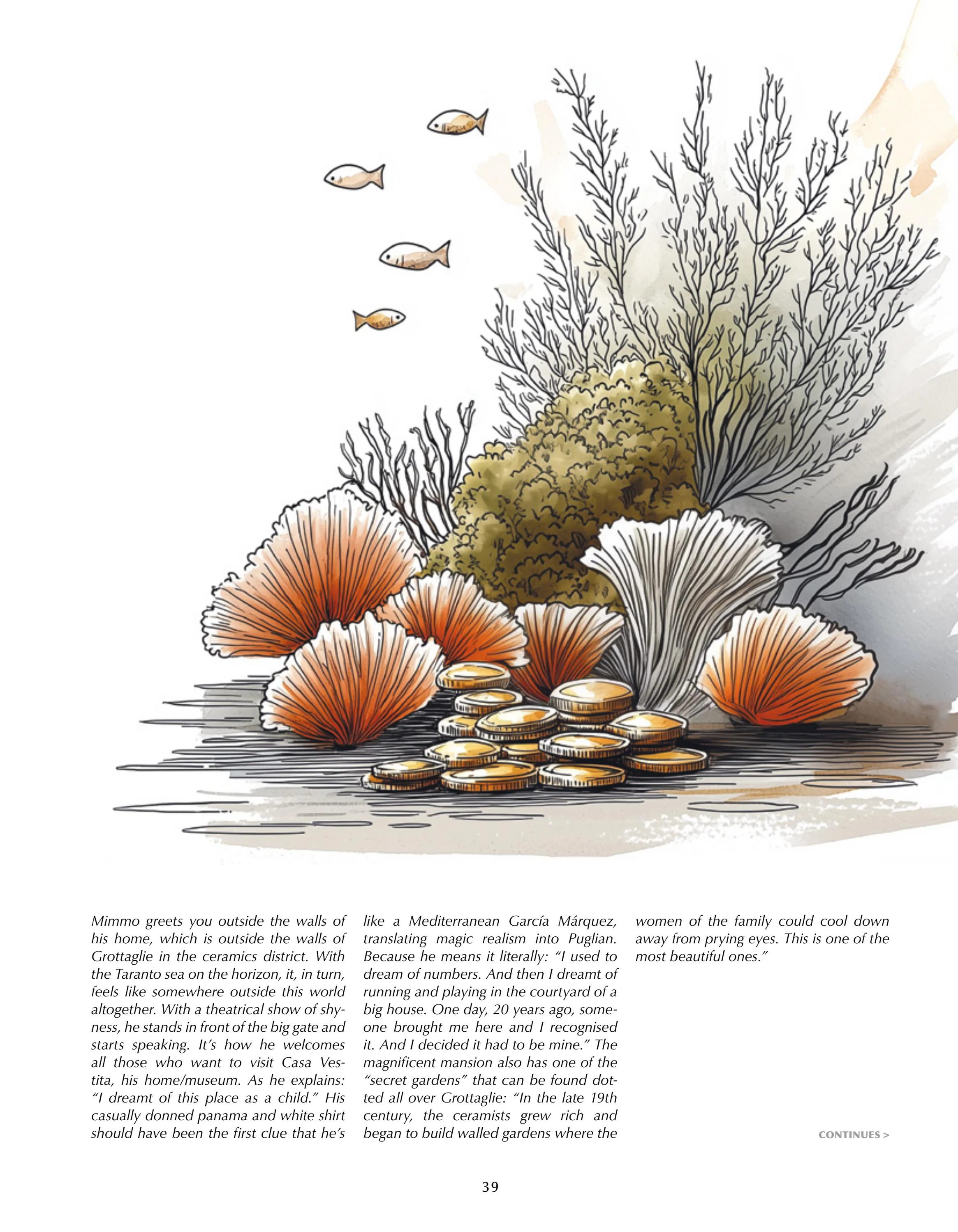
Sotto il pavimento del piano nobile Cosimo Vestita ha trovato le cisterne che servivano da pozzo e da aria condizionata per la casa, in pietra di calcarinite (un tempo qui c’era il mare) e costellate di fossili di ricci e conchiglie. E poi, scoperta delle scoperte, la chiesa: «Prima apparve una colonna tortile, che simboleggia I'infinito. Poi delle nicchie, delle colombaie e un forno per il pane. Ma gli archeologi erano perplessi: questo forno non è mai stato usato, e non dovrebbe trovarsi qui. Lo buttarono giù e dietro apparve una cappella affrescata: Santa Barbara, il Cristo Pantocratore raffigurato in gloria e San Nicola. Oltre a trecento monete con impressa la croce templare, a dimostrarne l’antichità». Lì sotto si resta tutti in silenzio per un po’. Mentre Cosimo Vestita raccoglie da terra una melagrana e la scaglia contro una parete. Lui ha già cambiato storia. È già in un‘altra stanza del sogno: «Lo facevano anche le giovani», spiega. «Per ogni grano che cadeva, era un figlio donato dal cielo». Succedeva il giorno prima delle nozze. Qui, nel giardino segreto.
Mimmo greets you outside the walls of his home, which is outside the walls of Grottaglie in the ceramics district. With the Taranto sea on the horizon, it, in turn, feels like somewhere outside this world altogether. With a theatrical show of shyness, he stands in front of the big gate and starts speaking. It's how he welcomes all those who want to visit Casa Vestita, his home/museum. As he explains: “I dreamt of this place as a child.” His casually donned panama and white shirt should have been the first clue that he’s like a Mediterranean Garcia Marquez, translating magic realism into Puglian. Because he means it literally: “I used to dream of numbers. And then I dreamt of running and playing in the courtyard of a big house. One day, 20 years ago, someone brought me here and I recognised it. And I decided it had to be mine.” The magnificent mansion also has one of the “secret gardens” that can be found dotted all over Crottaglie: “In the late 19th century, the ceramists grew rich and began to build walled gardens where the women of the family could cool down away from prying eyes. This is one of the most beautiful ones.”
There’s a new story with every step. Centre stage in the garden is taken by terracotta jars as tall as men, lined up in phalanxes like warriors However, Mimmo wasn't exactly flush with cash: all he had were his two hands, the “Cosimo Vestita” master ceramist’s workshop and a few promissory notes to sign. The owner was a woman in her nineties who used to stroll in the garden in her youth. Perhaps the place had also cast its spell on her, because — without giving it much thought — she decided to sell it. For a paltry amount. Little did she know that it had some Indiana Jonesesque discoveries in store. The gate opens. “I made this out of earthenware I found during the renovation process,” reveals Mimmo, pointing to a mosaic. “Some pieces are from the second century AD. The green ones date back to the Renaissance.” There’s a new story with every step. Centre stage in the garden is taken by capasoni: terracotta jars as tall as men, lined up in phalanxes like warriors. They bear witness to a time when an artisan could make 100 wineskins in a single day. In the big kilns of Crottaglie, olive pomace was used as fuel: “And they would sing. And with every shovelful of olive pomace, they would call the name of a worker. And then the names of the town’s three patron saints. And finally a hymn for all the saints, so no one in Heaven was left out.”
Under the floor of the piano nobile, Cosimo Vestita found the cisterns that served as a water supply and air conditioning system for the house. They were made of calcarenite (this area was once under the sea) and dotted with fossilised sea urchins and shells. Then came the biggest discovery of all: a church. “The first thing to appear was a Solomonic column, symbolising infinity. Then niches, dovecotes and an oven for baking bread. But the archaeologists were puzzled: the oven had never been used, and it shouldn’t have been there. They knocked it down and found a chapel behind it, with frescoes of Saint Barbara, Christ Pantocrator in glory and Saint Nicholas. There were also 300 coins with the Templar cross on them, showing how old they were.” Down there, everyone is quiet for a while. Meanwhile, Cosimo Vestita picks a pomegranate off the ground and throws it at a wall. He’s already onto the next story. He’s already in another room from his dream. “Young women used to do that,” he explains. “They believed a child would be sent from heaven for every seed that fell.” They used to do it the day before a wedding. Here, in the secret garden.